Updated: October 8, 2026
3.
4.
Sean Walmsley
Abstract Photography
Notes on the meeting house exhibit
(October-November, 2026)
The reason why I’m writing these notes about the images in the exhibit is that people often want to know how the images were photographed and what was done to them that turn them into abstract representations. I didn’t want to do this as part of the exhibit itself because I think viewers should feel comfortable in interpreting the images in their own way without the artist telling them how they should understand them. Anyway, I’m often asked to explain my process for creating abstract photography, so that’s why I’ve made these notes available.
I’ll start at the entrance on the wall immediately to one’s right, then next the wall along the corridor toward Donna’s office, then the wall behind the sofas and chairs, next behind the desk, and finally the images on the wall shared by the Meeting Room.
And many thanks to Sheila and Ginny for their assistance in mounting the exhibit. Their knowledge of the space was especially useful in placing the photos where they could best be seen.
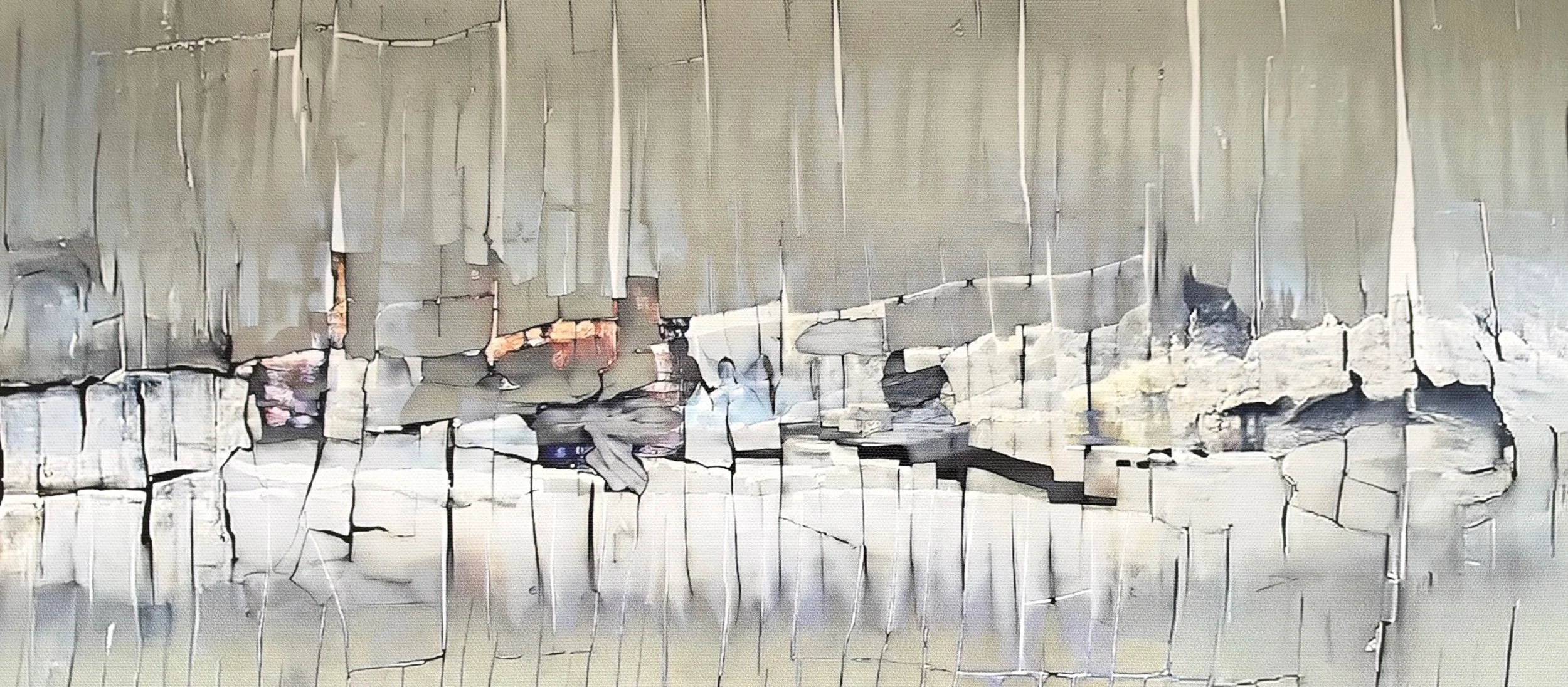
This started as a straight photo of paint on a building at the Saratoga Springs Race Track.The paint was so old, it was literally peeling off the walls. The first time I photographed it, I really wanted to create an image just of paint peeling. But eventually I decided to return to create a multiple exposure in my Canon camera that can shoot up to 9 images, each image layering the previous one. The final image was then post-processed in Lightroom and Photoshop, resulting in a variety of compositions made possible through these applications being able to recompose, apply different colors to individual parts, and so on. So the peeling paint has been transformed into what might be interpreted (as I did) as a dystopian snowy scene (even though the original photos were taken in the summer), yet the peeling paint is still there, although it’s now vertical instead of horizontal. My interpretation is just one: by displaying it here, now your interpretation becomes valid.
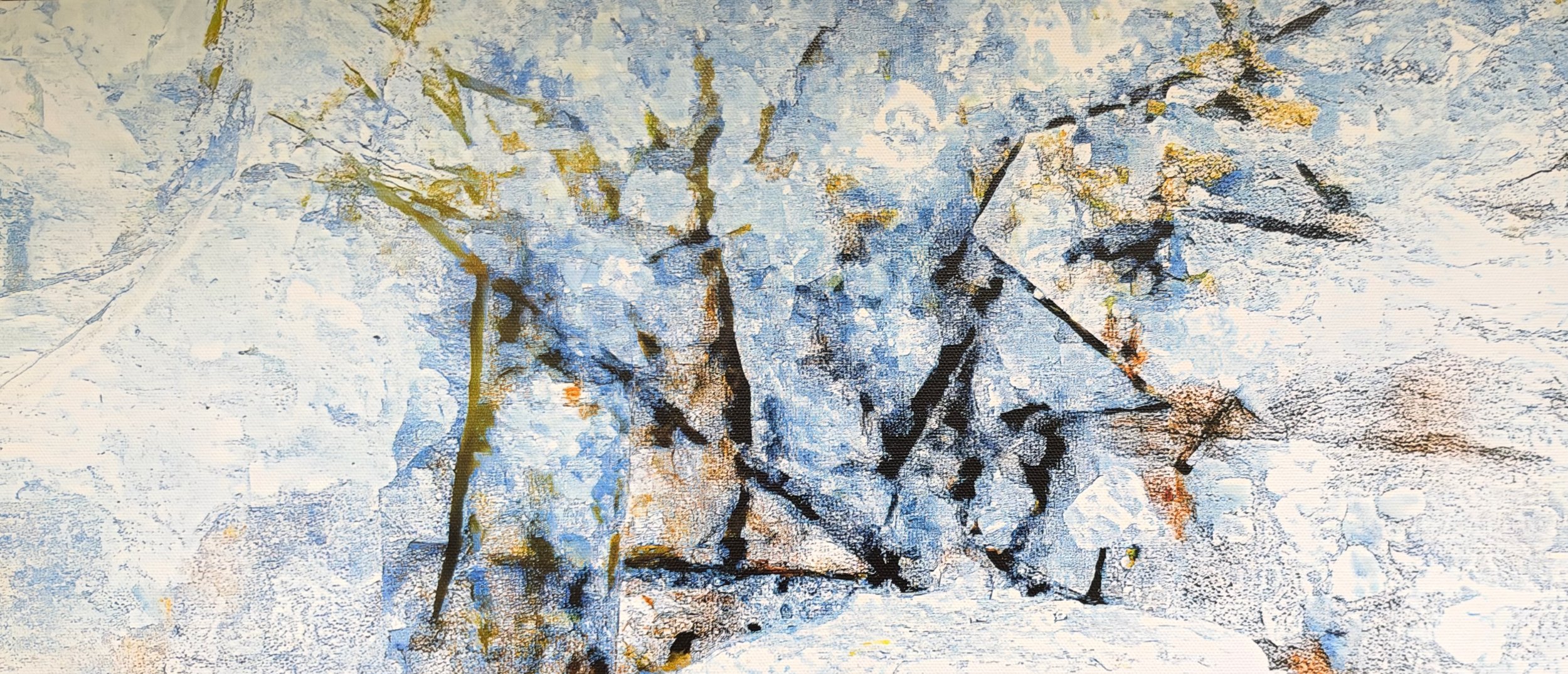
This originally was a tree in winter, transformed similarly as the one above. The only thing I did differently was to use an application (Topaz Photo) to upscale it so that became fractal and jagged. These two images reflect an interest I have for making small prints as well as larger ones.
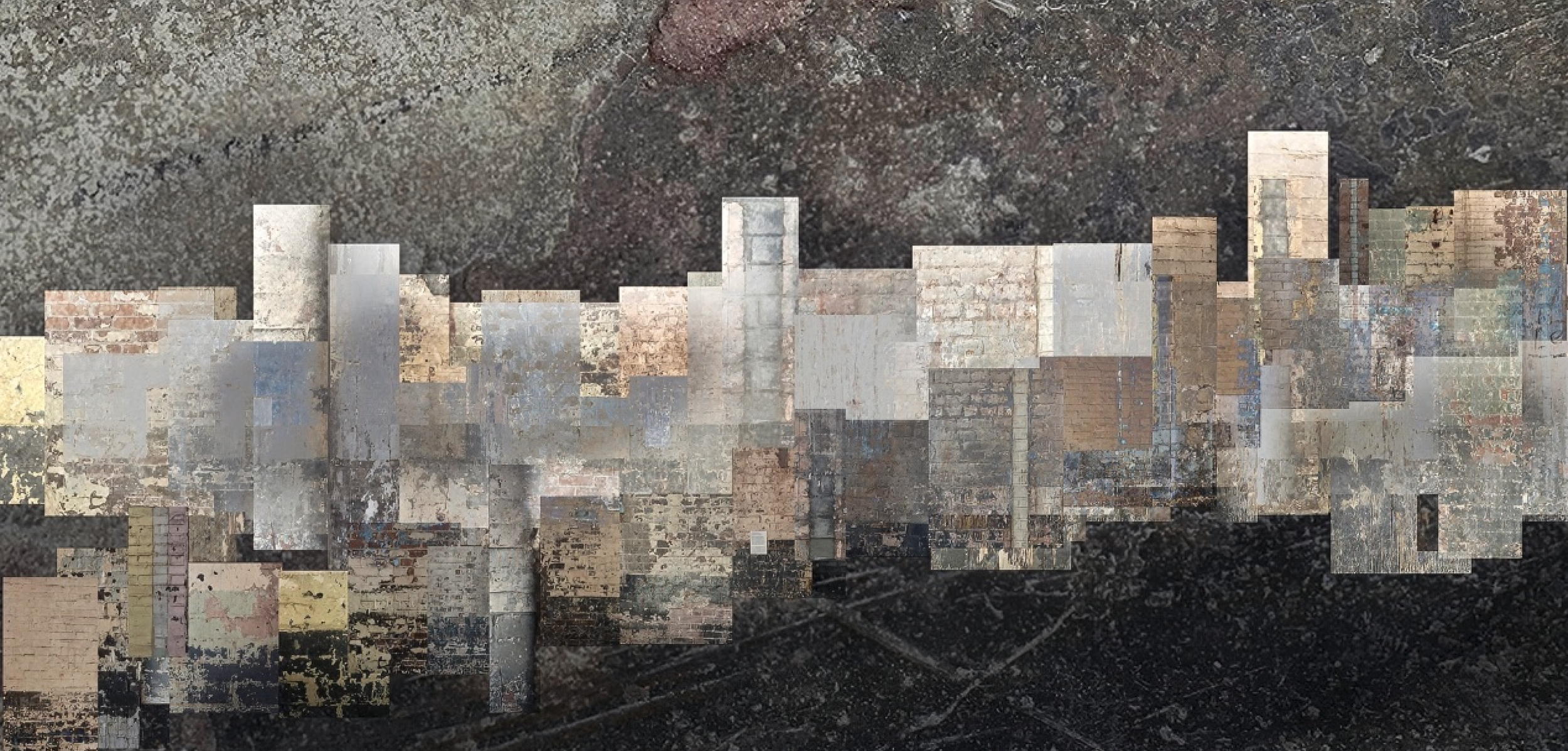
This collage is made up of a large number of individual photos of Mass MoCA walls taken over several years’ worth of visits. These were assembled in Adobe Indesign, and then a background was created from a photo I took of some rocks. Next, the image was taken through Photoshop and Lightroom to adjust colors and overall design.
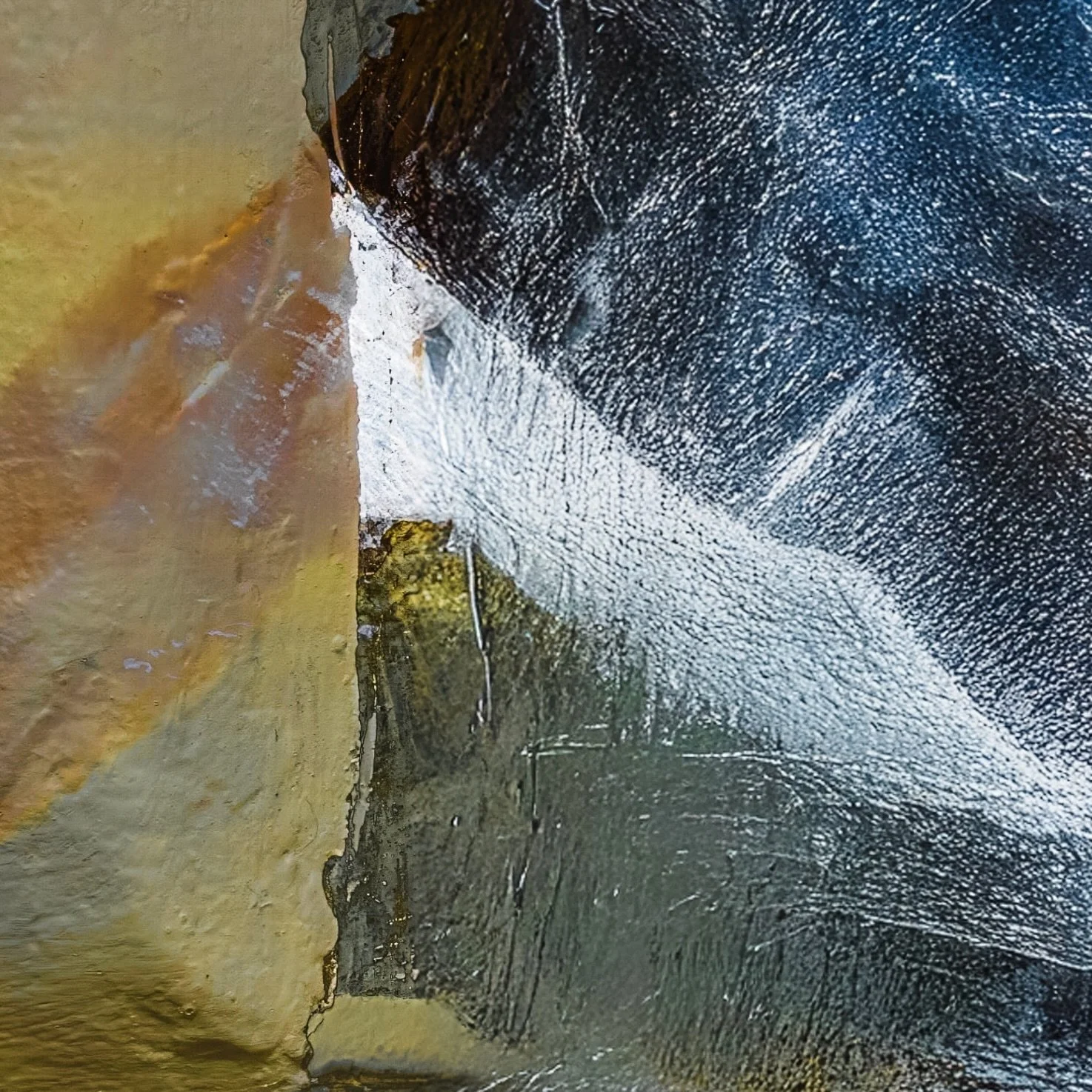
This is the opposite of a straight photo, taken at roughly the same time as ‘Turbulence’ in a very old cottage in the UK. I gave this one the title of ‘Fool’s Errand’ mostly because it’s better than ‘Untitled’ but also because I want the viewer to interpret it in their own way. It’s one reason why almost all the images in this exhibit don’t necessarily reveal the meaning that I had for the work. If you like this small image, I’m curious why—is it because it reminds you of something, or you like the composition or the palette? If it does nothing for you, then give it a pass…
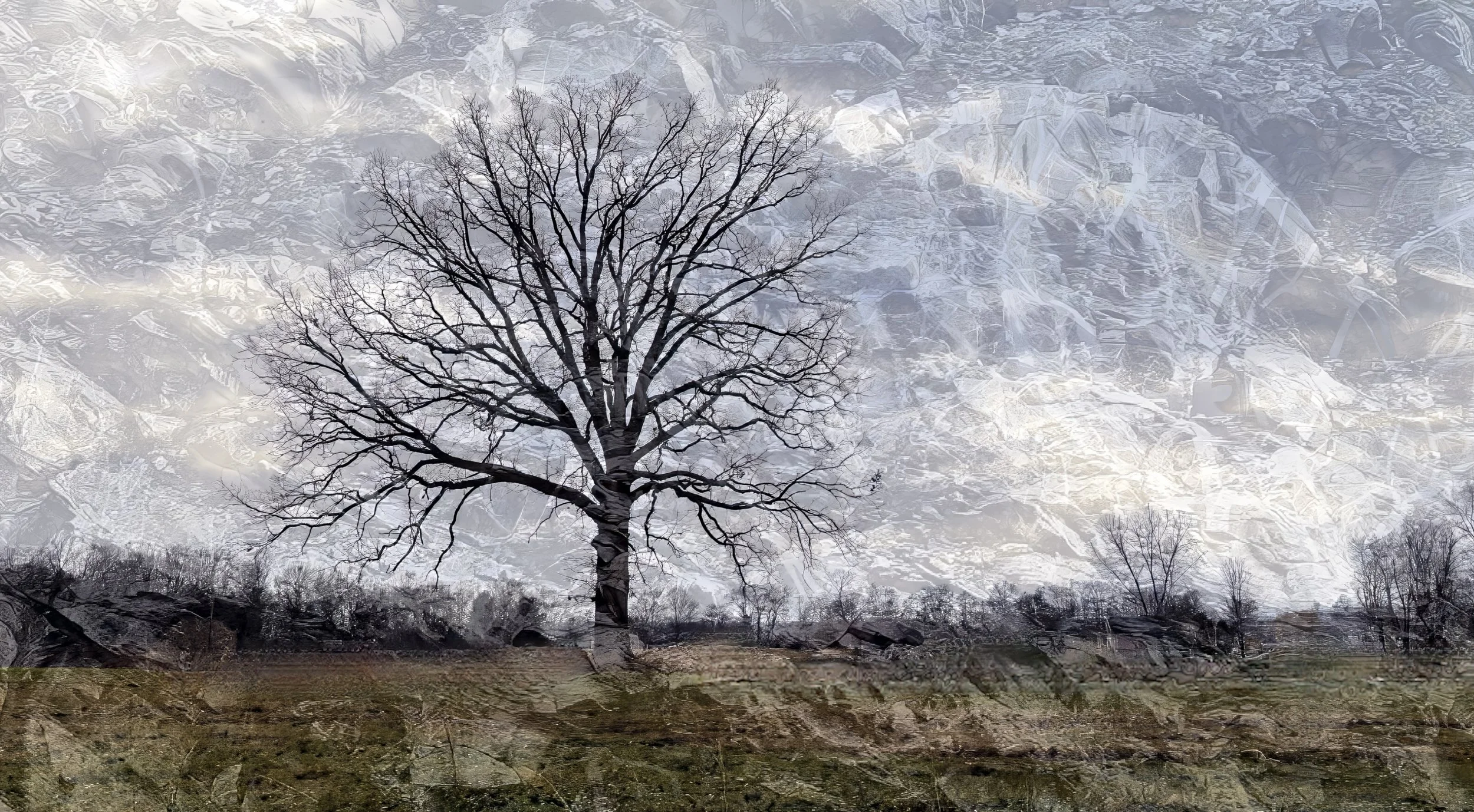
This is a companion piece to the two trees in the UK, taken near Schuylerville, NY. The first thing I did to it was to remove some farm buildings over to the right of the tree, but then I combined it with a heavily processed version of the rock face by the Sturbridge Exit on the Mass Pike. This distorted both the foreground as well as the sky (with different effects on both). My goal wasn’t to turn the image into a painting, but rather to give the photograph a blustery, stormy feeling. I’ve also used water reflections for skies which work quite well, too. Of course, I only use background images that I’ve photographed myself.
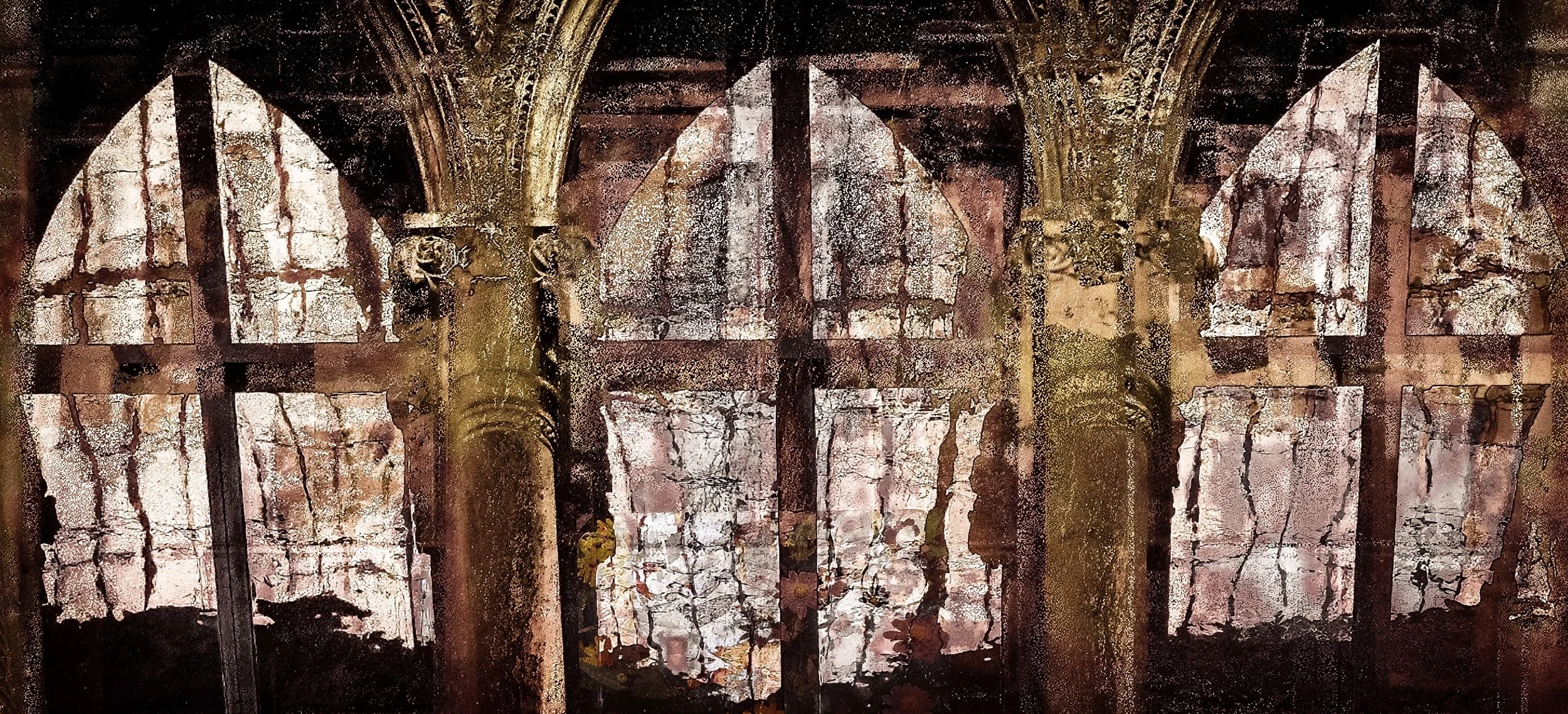
The Isabella in the title refers to Isabella Gardner. This is a multiple exposure of one of the windows in the Museum in Boston. Four in-camera images, merged inside the camera and then post-processed in Lightroom and Photoshop. It’s a good example of my technique for creating abstract images that aren’t completely disconnected from real life, yet I hope convey a vivid expression of the architecture of the building. It’s one of my favorite prints and it usually hangs on the wall in my study at Lathrop.
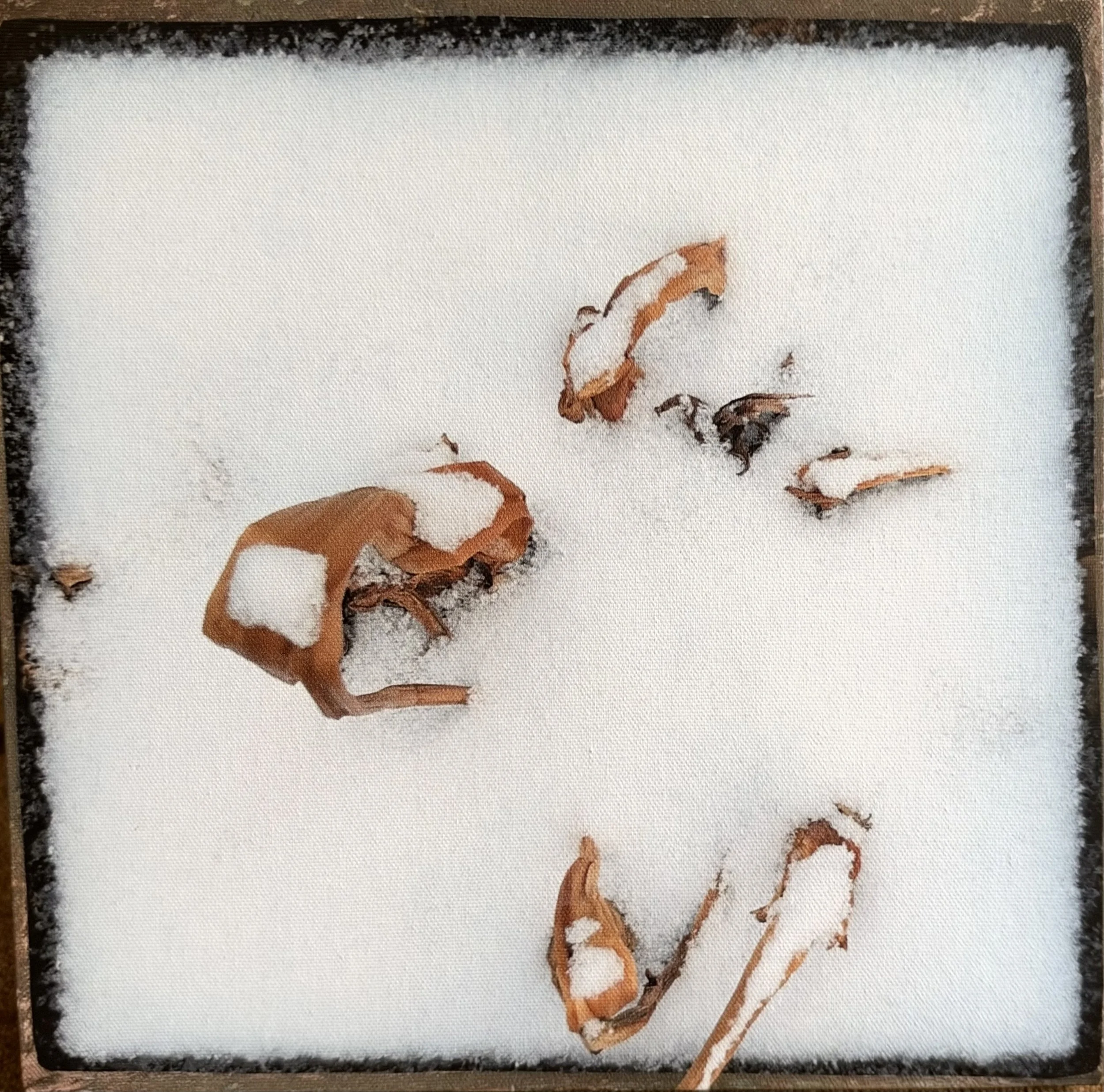
This is a straight photo of some leaves in a container outside the gym I used to belong to in Saratoga Springs, NY. It only needed cropping. What I liked about it was that the leaves looked like lettering of some kind. Plus the leaf extending past the container’s edge gives it a three-dimensional effect. I capture little things like this mostly because they tickle my sense of humor and curiosity.
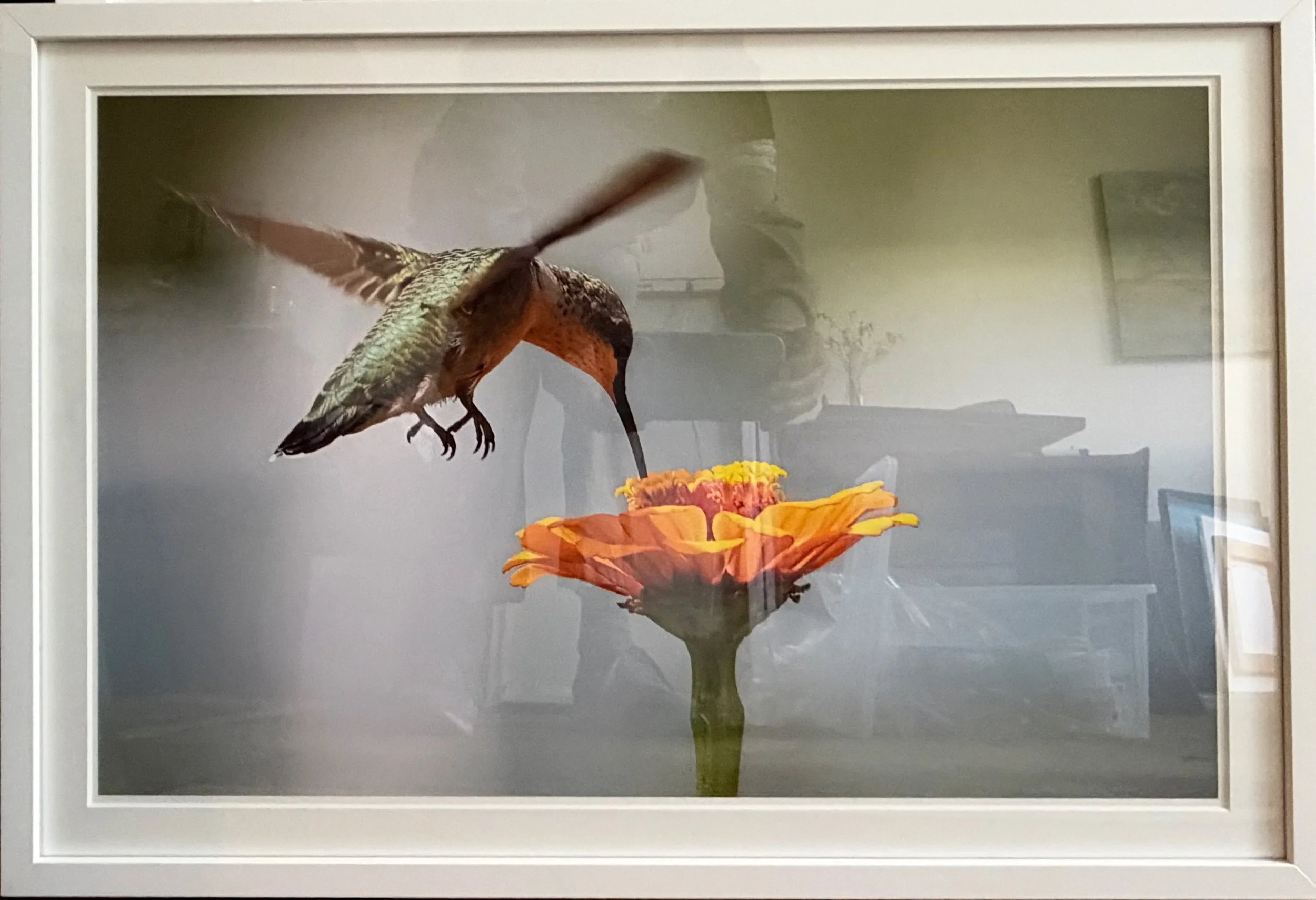
I said in the introduction that one of the transitions I was taking since I came to Lathrop was to frame more of my exhibition prints professionally. So far, I’ve had two prints receive this treatment, one is this print of a hummingbird I took this summer in my back garden on Firethorn Lane. It wasn’t a lucky shot; this hummingbird graced me by spending a full ten minutes feeding on my zinnias in a raised bed, so I had the luxury of taking my time less than 15 feet away. (this image has reflections from the glass in my living room—the one you see in the exhibition has a bokeh of evergreens and maple trees).
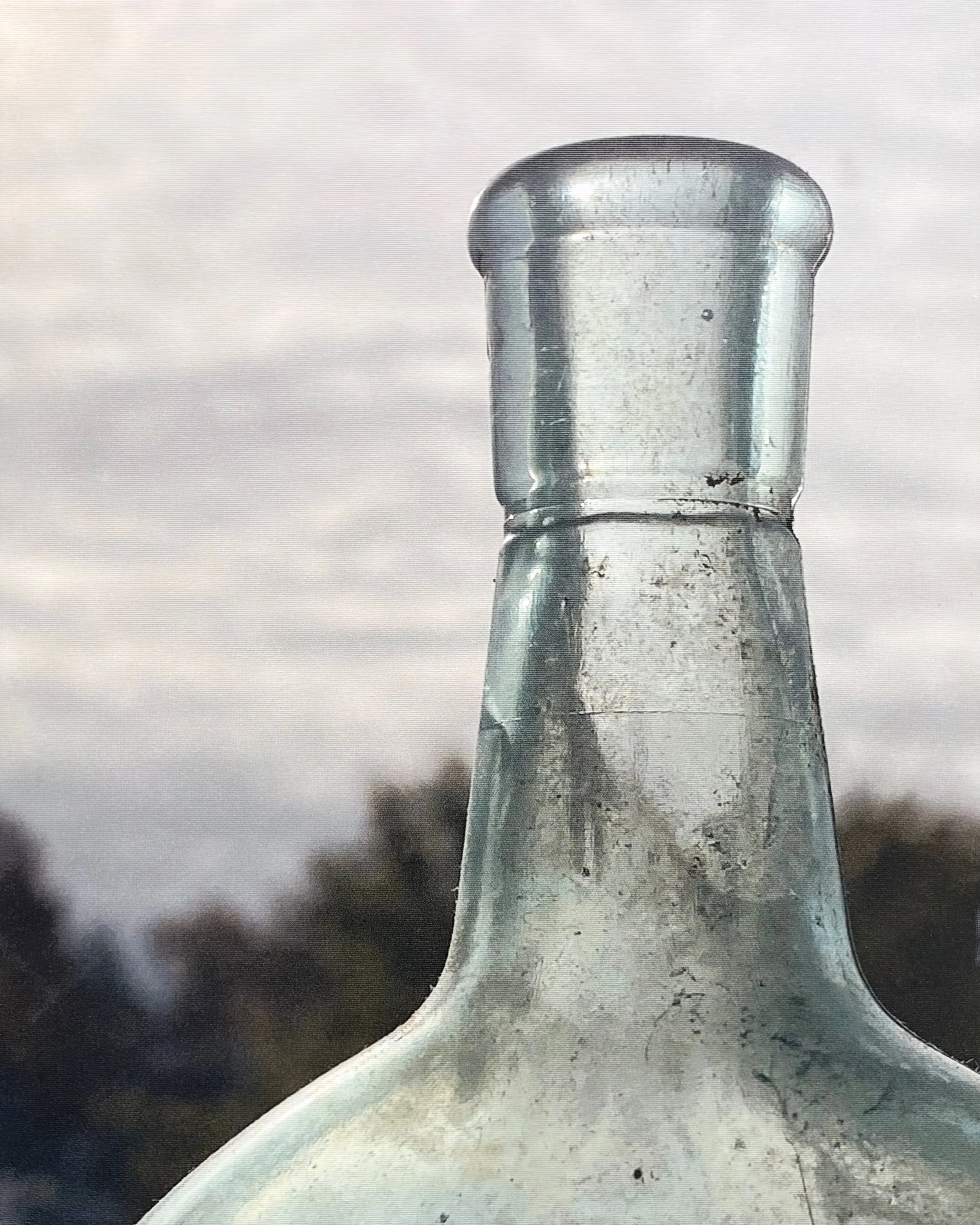
This is pretty much a straight photo of a bottle that was found when digging the foundation of my house in Saratoga Springs, NY. I just couldn’t resist the smooth texture and semi-transparency of this old glass, and its 19th Century origins.
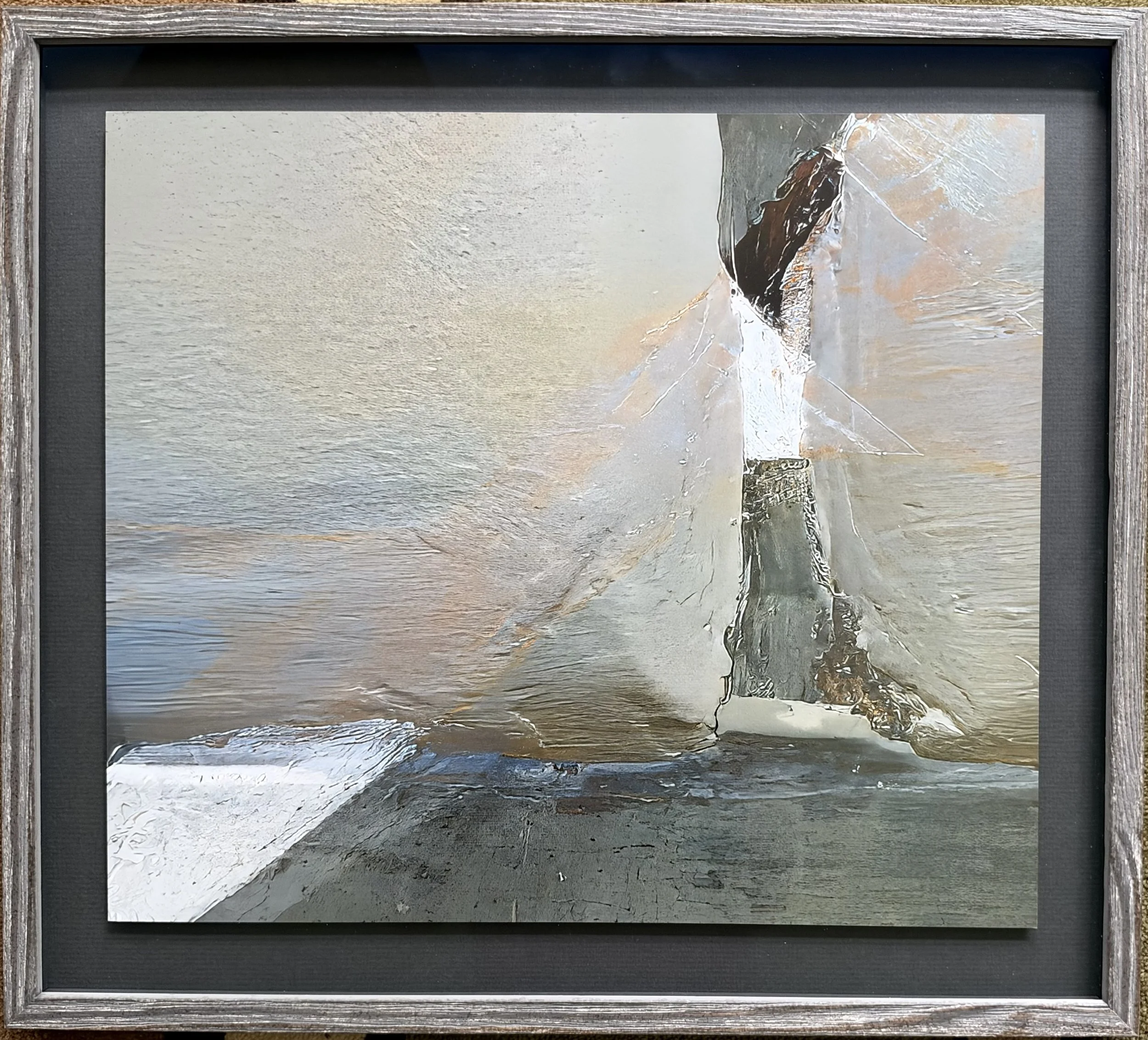
I gave this image the title of ‘Turbulence’ not wanting it to be labeled “Untitled’ but that’s only one interpretation, It’s really up to the viewer to bring their own understanding of it, if indeed they even want to. But I can tell you how it came to be. It’s actually a multiple exposure of a wall in a very old cottage in Quainton, UK. This wall is made up of plaster filling the spaces between beams. Since it isn’t a literal depiction, there are various colors and textures intermingled. This image has just been printed on paper and then affixed to fiberboard to give it depth in the frame.
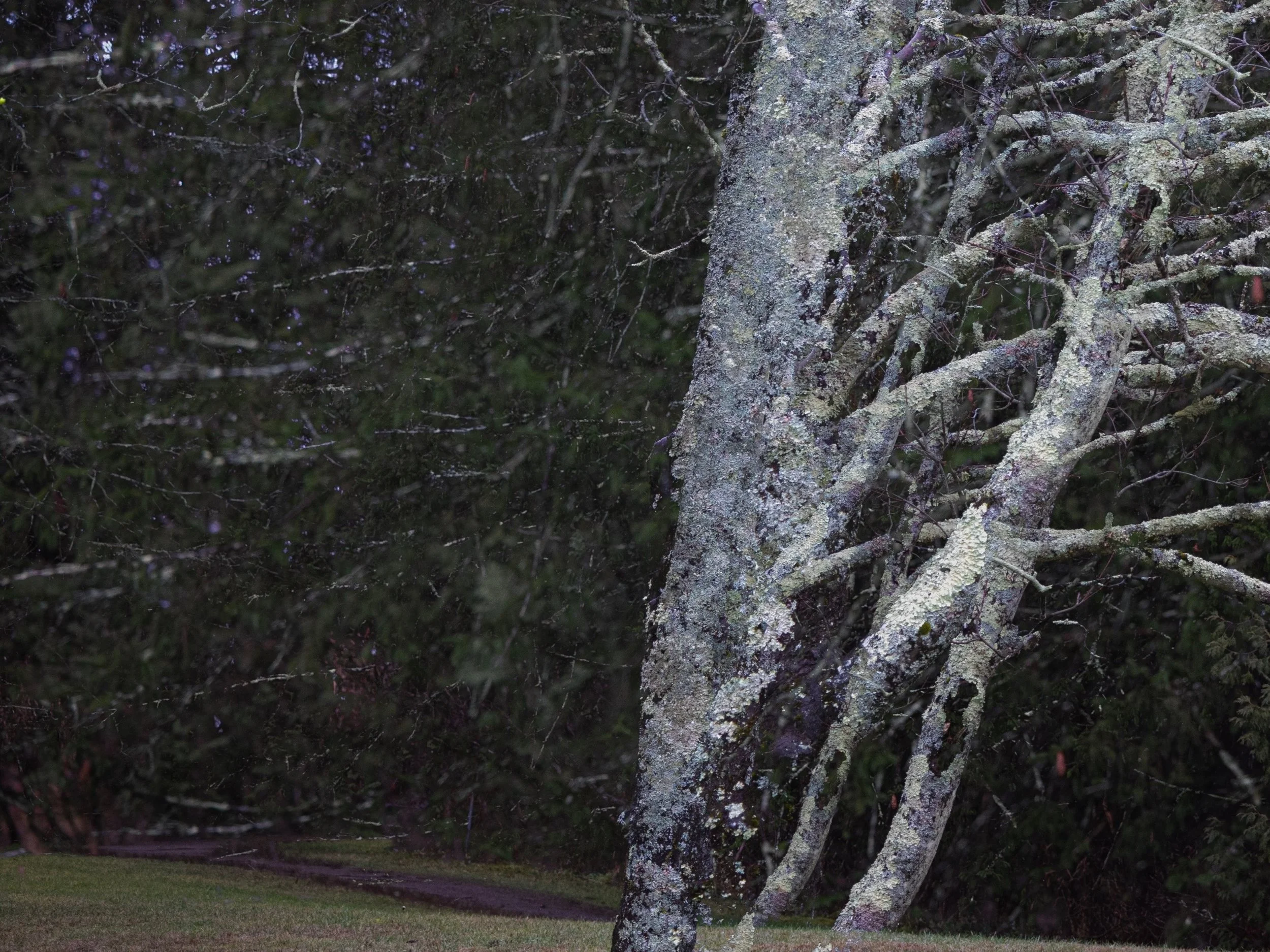
Twist in the wind.
This is one of the first multiple exposures I did after taking Valda Bailey’s and Doug Chinnery’s workshop in Lenox, MA in 2022. I chose a small, still maple tree and took 5+ in-camera images, transforming it into a windy, blowing scene. It’s actually in color although the trunk appears in shades of grey. I just liked the blustery movement. Could I have taken the same shot on a blustery day? Yes, but that would just be a regular photo. This is a impression of a blustery day.
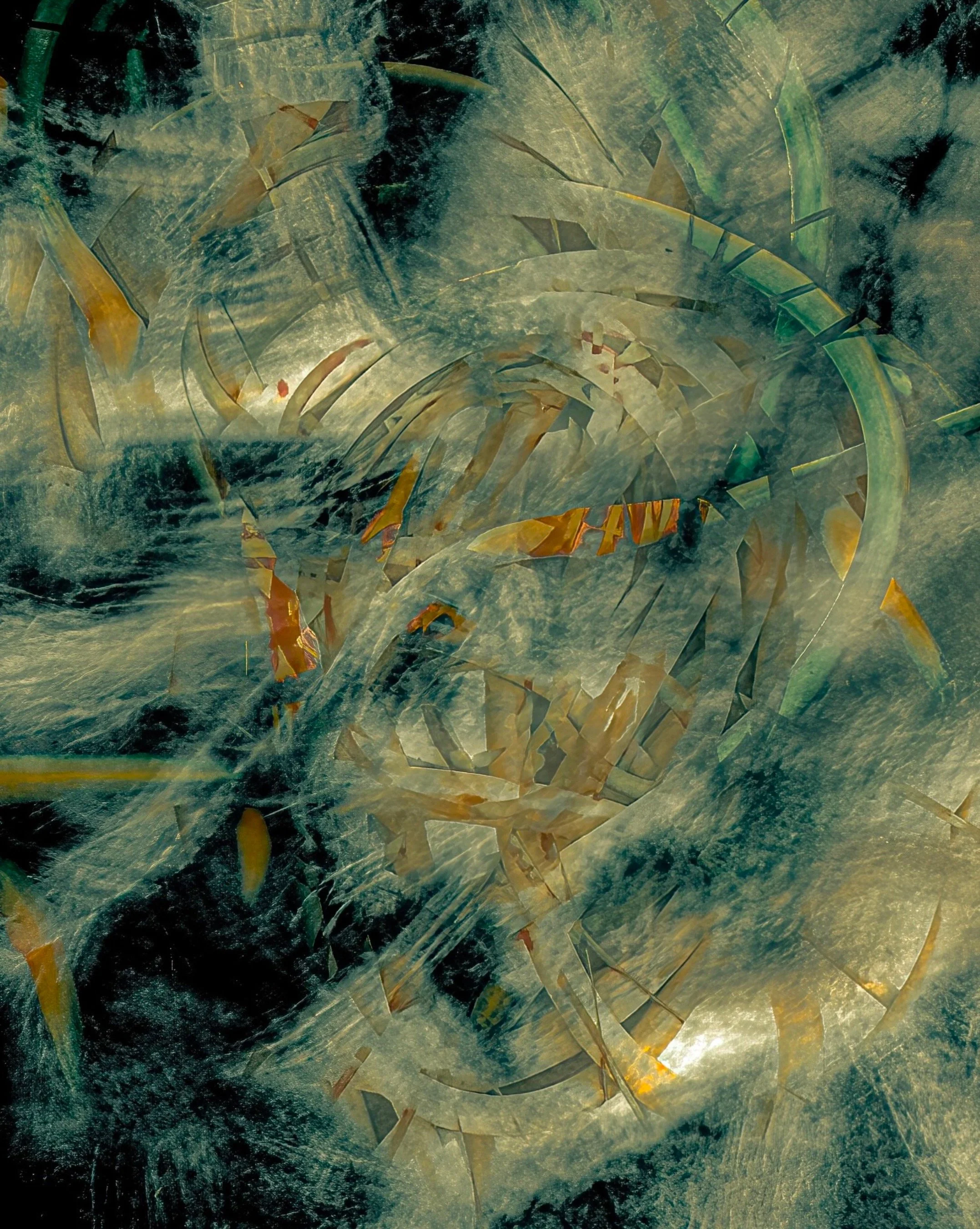
Garlic scapes dancing.
This is a more seasoned multiple exposure using my homegrown garlic scapes in an intentional camera movement (multiple exposures with slow shutter speeds moving the camera in intentional directions or perspectives—or often random). Then I took it through Photoshop and Lightroom to emphasize the curly nature of scapes, as well as bring out the colors and texture. I like the challenge of these harder compositions drawn from nature.
PS I really don’t like eating scapes, but they are such fun to photograph.
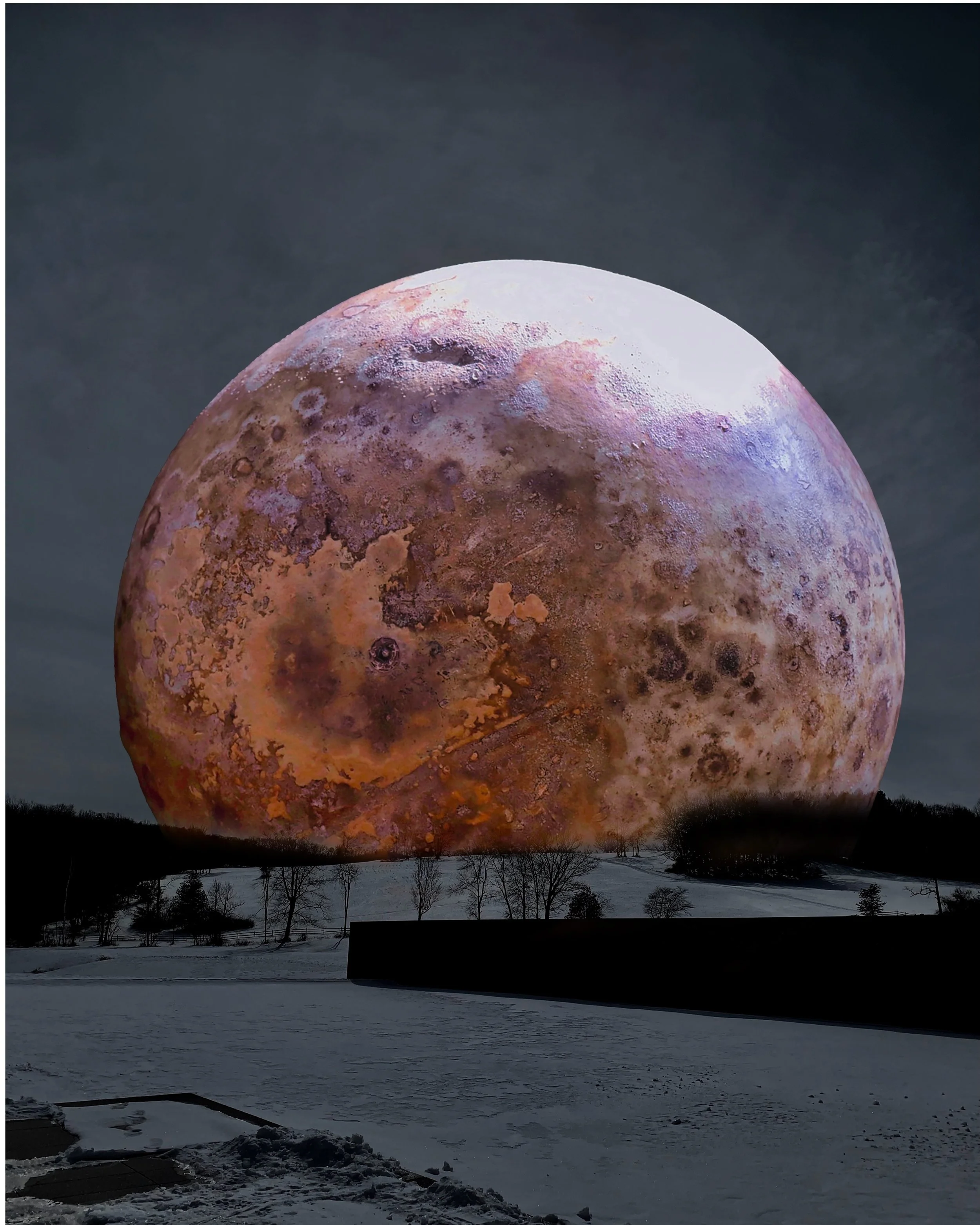
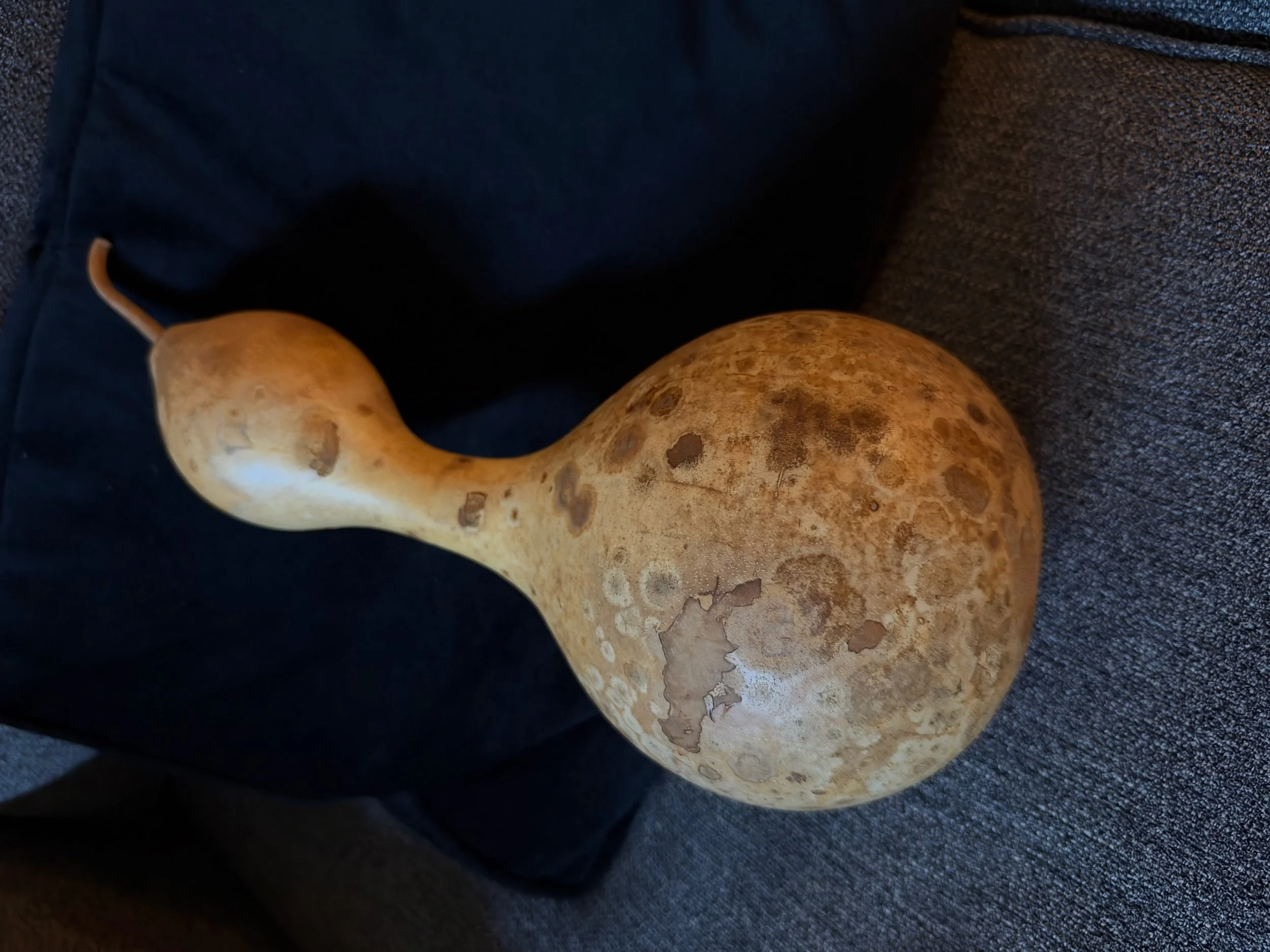
Gourd Moon over The Clark Institute
A very rare sighting indeed, but predicted by Nostradamus to take place every 367 years in this very spot (yes, I fact-checked it online.)
Well, not exactly. This was one the first exercises I did while learning Photoshop, and I’m not proud of what I accomplished with merging the ‘moon’ with the background. However, what is true is that I learned how to cure a gourd and photograph it with a single flash light so the stem was hidden, and I still have the gourd. Again, just a taste of my satirical British humour, which surprisingly enough won me Best in Show for this photo at a regional juried art exhibition.
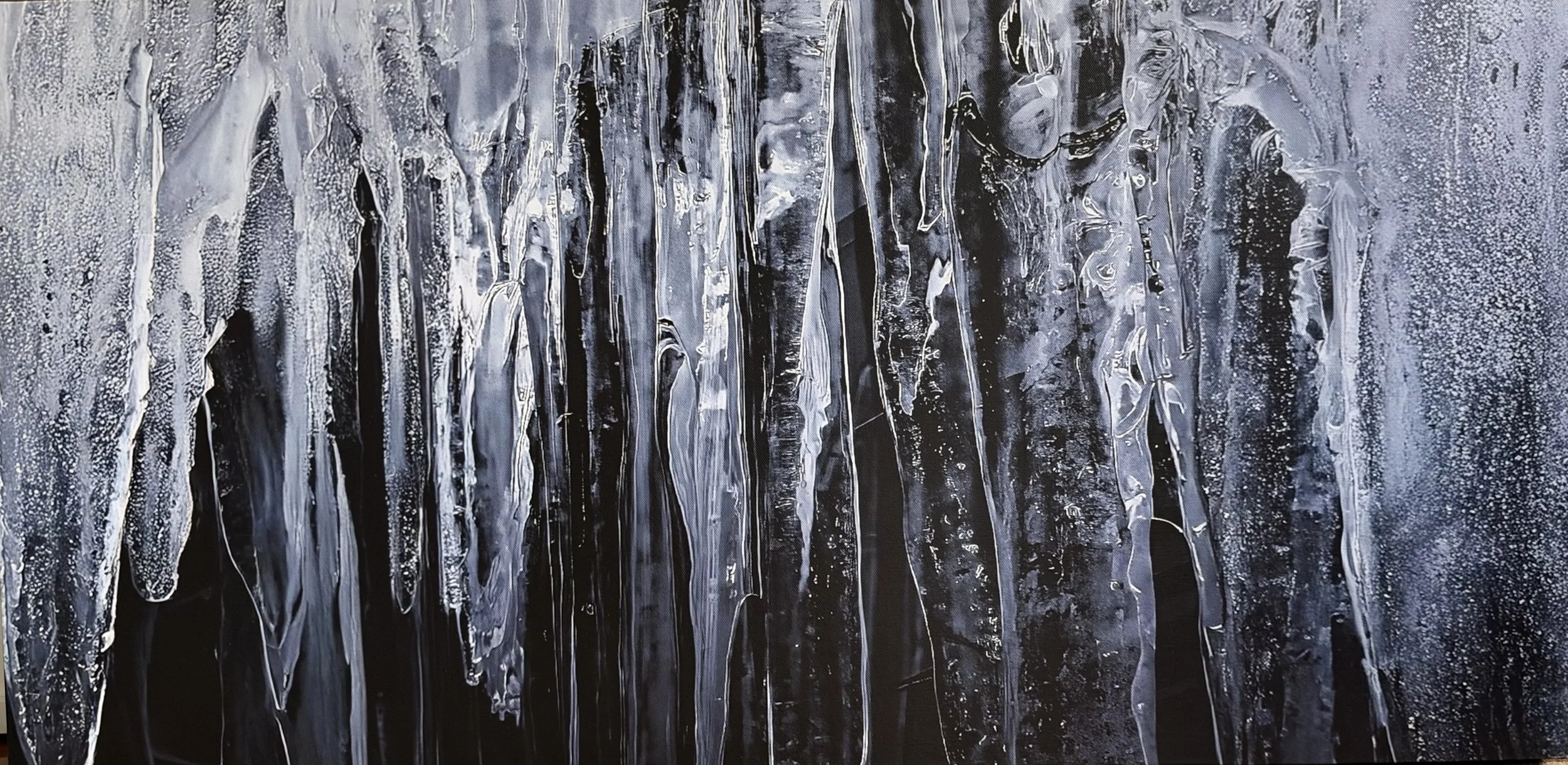
This image is of icicles hanging down from the roof of an old house in Dorset VT. It may have the appearance of a straight photo, but actually it’s not a composite of multiple exposures inside a camera but several versions of the one photo recreated through Lightroom and Photoshop. As you can see throughout the exhibit, I like the 16:9 format—two of my cameras, including my iPhone can take photos with 16:9, but post-processing can do it, too.
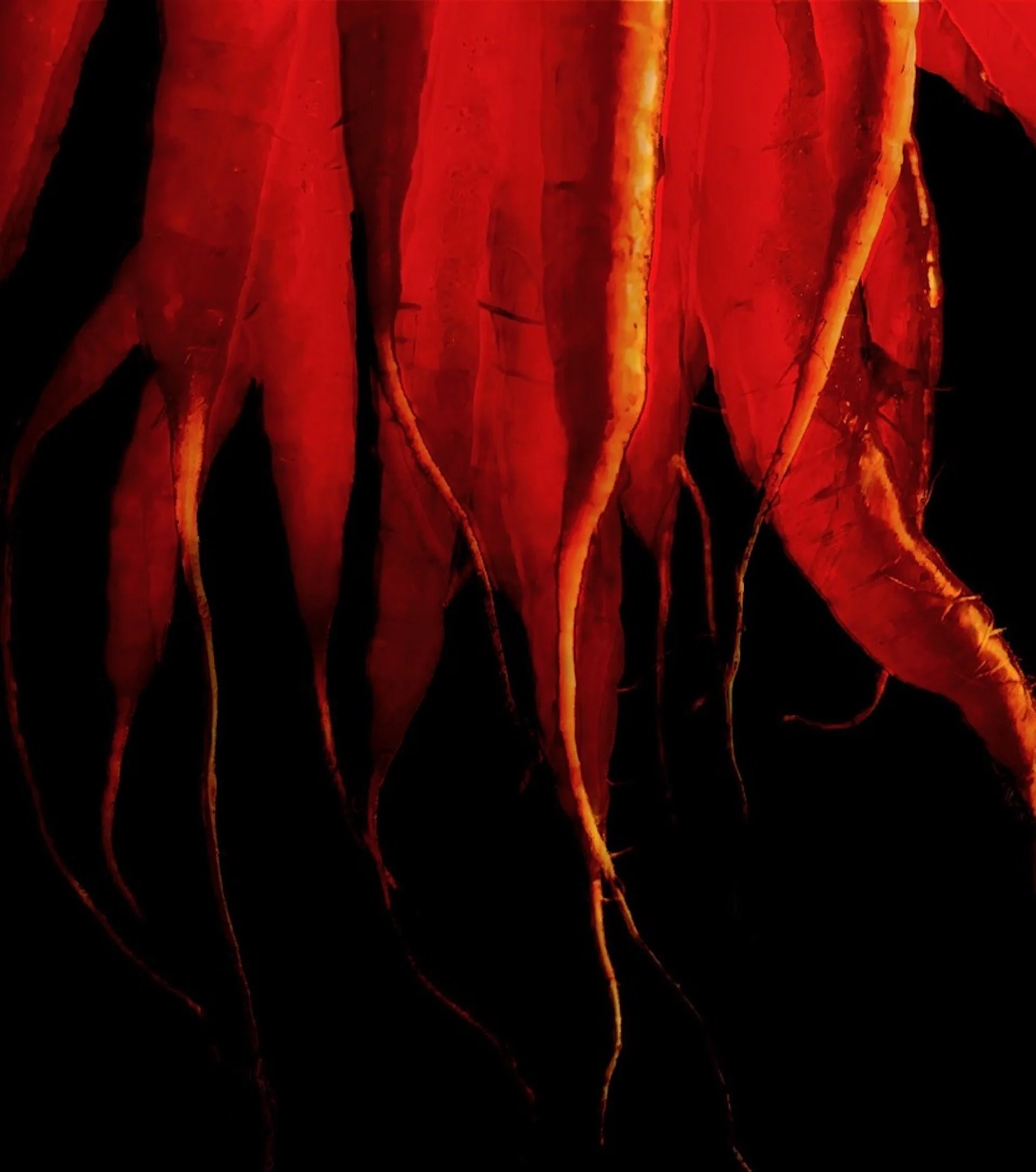
The root of all carrot.
The tiny roots—almost hairs—of carrots I grow fascinate me as subjects for photography. This is a multiple exposure against a black background and immediately it felt rather devilish which is why I gave it the title. But no, it’s just roots of carrots. I love photographing nature up close, and especially creating multiple exposures to create a non-literal version of reality.
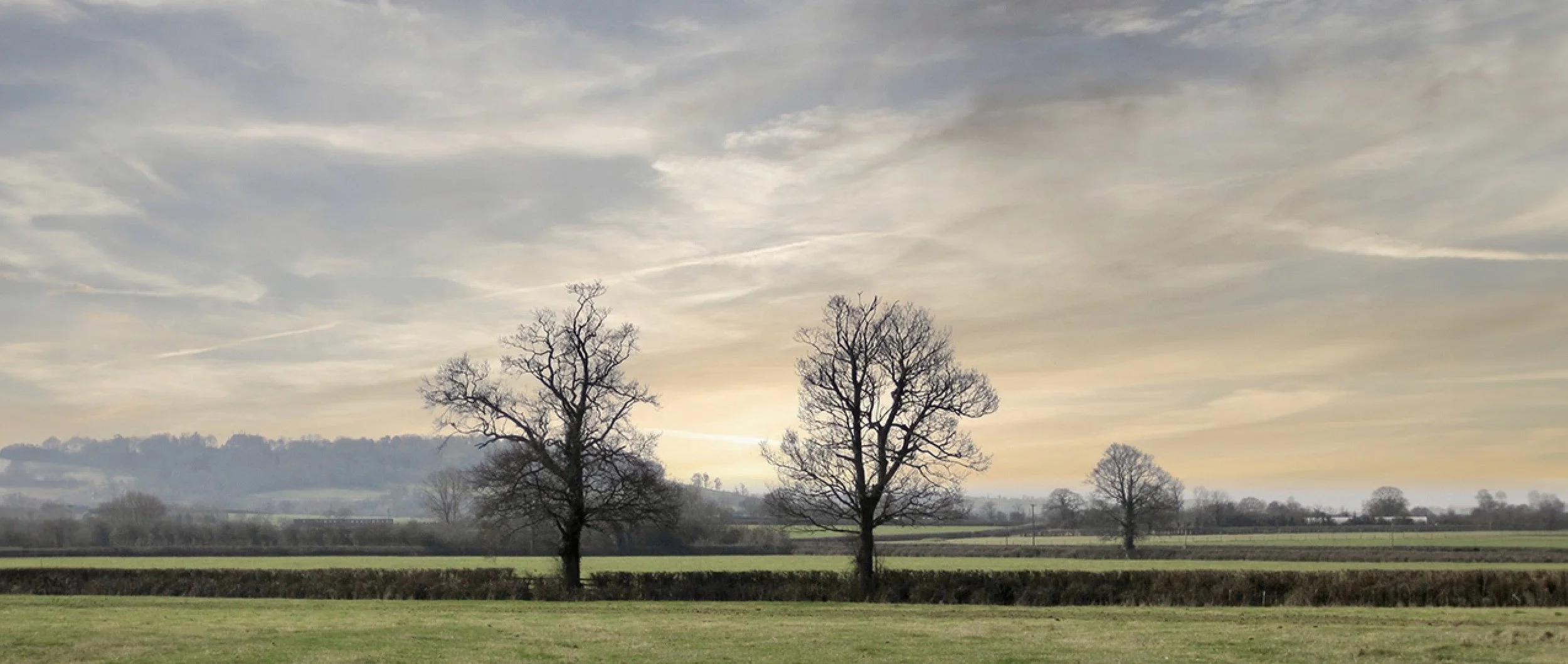
Two trees photographed near Quainton, Buckinghamshire. All I did to this photo was process it in Photoshop and Lightroom to bring out the colors in the sky.
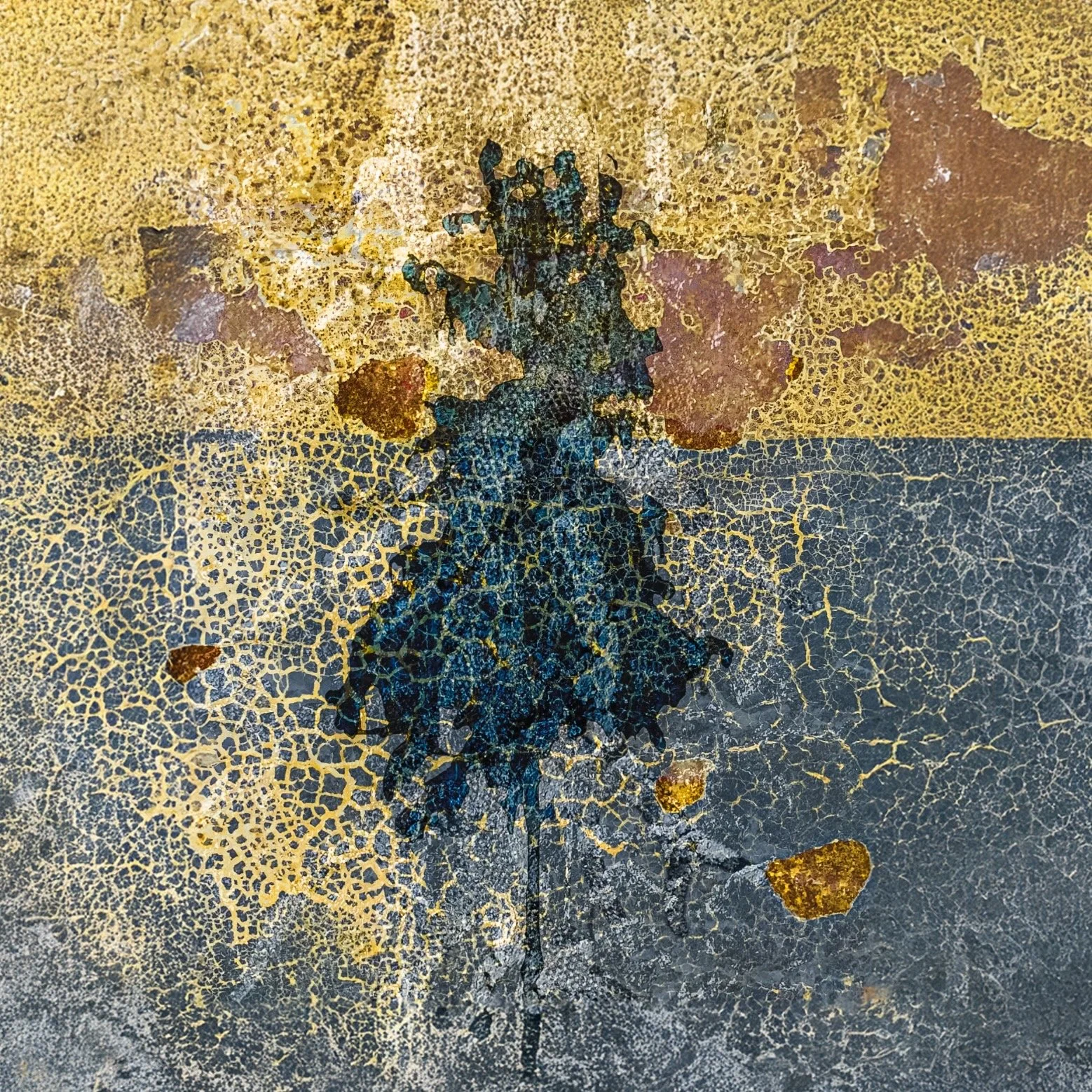
This is a collage made up of a wall in a pub in Galway, Ireland; a mosaic pattern of burned wood on a telephone pole in Cambridge NY, and a leaf. Combining images from all over the place is a favorite way of creating an abstract image..
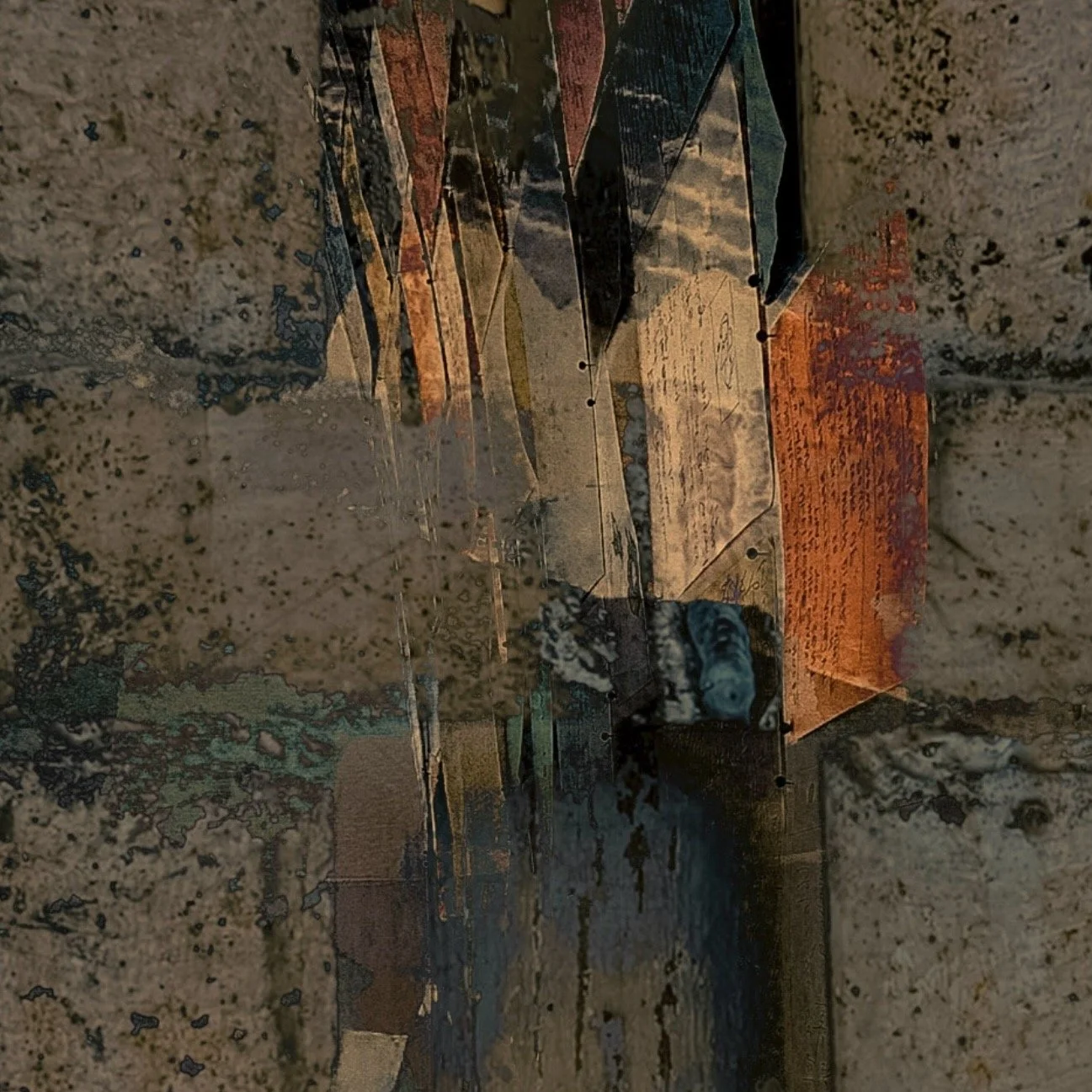
This is a collage made up of part of a column in Mass MoCA, an iron girder in a wall (laid out horizontally), and distorting a tiny part of an exhibit, to form a flame.
(I have been photographing walls and columns at Mass MoCA for years, and it’s been a rich source of my abstract work)